
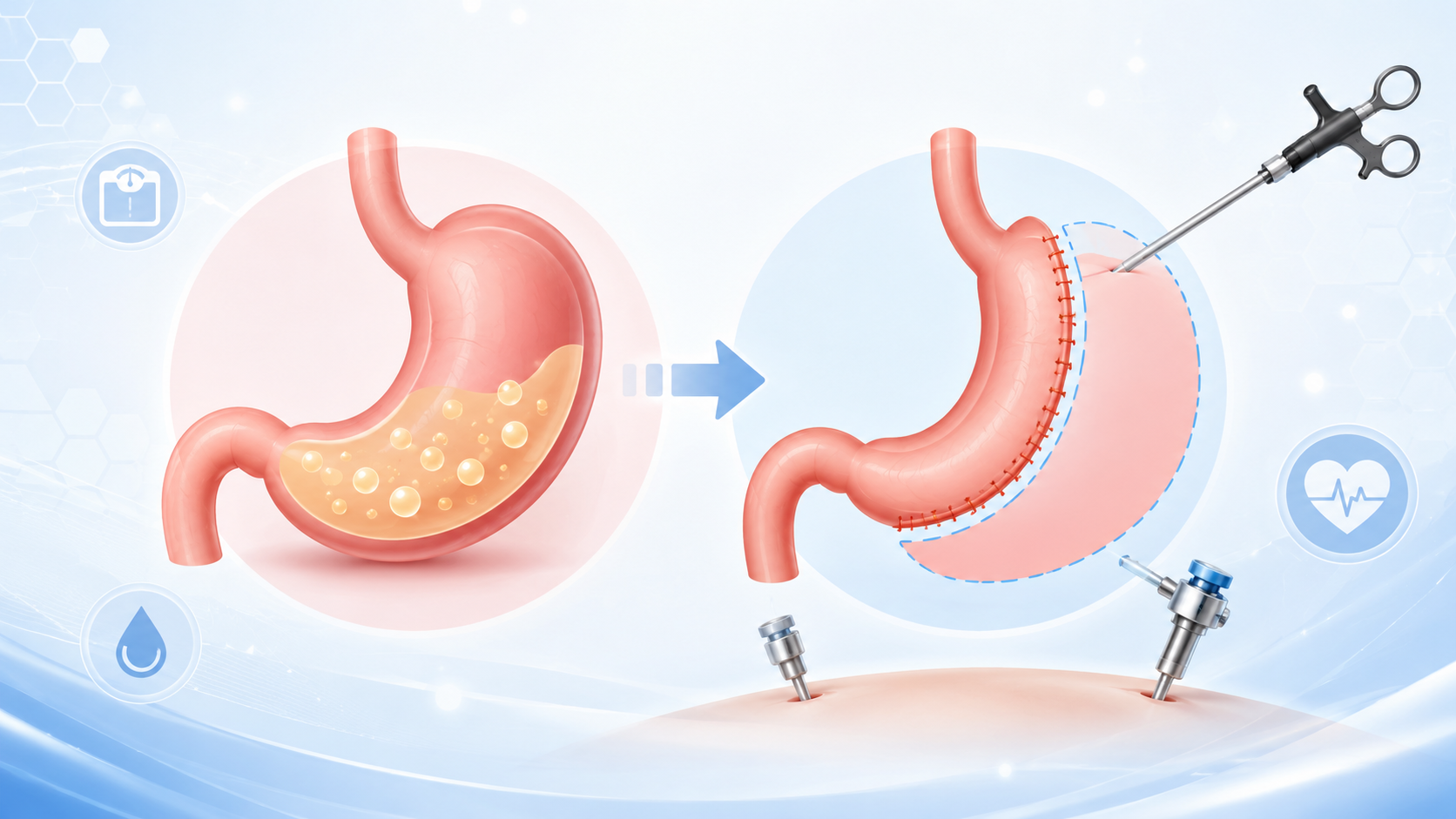
Minimally Invasive Bariatric and Metabolic Surgery
Many people with obesity, in addition to being overweight, may also have comorbid type 2 diabetes, hypertension, hyperlipidemia, obstructive sleep apnea, fatty liver disease, polycystic ovary syndrome, increased joint stress, and other issues.
Minimally invasive bariatric and metabolic surgery is primarily intended for individuals with moderate to severe obesity, or obesity combined with type 2 diabetes or other metabolic conditions. It can lead to weight loss and also improve obesity-related health problems such as blood glucose, blood pressure, blood lipids, fatty liver disease, and sleep apnea.
Minimally invasive bariatric and metabolic surgery is a category of treatment that uses laparoscopic or gastrointestinal endoscopic techniques to alter gastric capacity, the food passage route, or gastrointestinal hormone responses, helping patients reduce food intake and improve metabolic status.
Common laparoscopic bariatric and metabolic surgeries include: sleeve gastrectomy, Roux-en-Y gastric bypass, one-anastomosis gastric bypass, sleeve gastrectomy with single-anastomosis duodeno-ileal bypass (SADI-S), and others. Endoscopic bariatric treatments that have developed rapidly in recent years include intragastric balloon, endoscopic sleeve gastroplasty (ESG), and gastric bypass stent, among others.
Principles of Bariatric and Metabolic Surgery
Surgery does not simply make the stomach smaller; it also works through the gastrointestinal tract, hormones, neural pathways, and metabolic pathways. The mechanisms of minimally invasive bariatric and metabolic surgery fall into three main categories:
Reducing Gastric Capacity
With a smaller gastric capacity, patients feel full more easily, leading to reduced food intake. Both sleeve gastrectomy and endoscopic sleeve gastroplasty follow this principle.
Altering the Food Passage Route Through the Gastrointestinal Tract
Some procedures allow food to bypass a portion of the small intestine, reducing some absorption while altering gut hormone secretion, thereby impacting blood glucose and metabolic status. Both gastric bypass procedures and the gastric bypass stent involve this rationale.
Modulating Appetite and Metabolic Signals
After surgery, signals related to hunger, satiety, and insulin secretion may change, so patients eat less and feel full sooner. Some people may also experience improved glycemic control.
Post-Treatment Outcomes
For eligible patients, minimally invasive bariatric and metabolic surgery may offer the following benefits:
Weight Loss
Laparoscopic bariatric surgery typically results in more significant and sustained weight loss compared to lifestyle interventions alone. Certain endoscopic bariatric approaches can also produce a degree of weight reduction, but the magnitude and duration are generally related to the specific technique, patient compliance, and subsequent dietary and exercise management.
Metabolic Improvement
For people with obesity and comorbid type 2 diabetes, hypertension, hyperlipidemia, fatty liver disease, or sleep apnea, postoperative improvements in relevant indicators may occur. Some patients may be able to reduce medication dosages, but whether medications can be discontinued must be determined by endocrinologists, cardiologists, pulmonologists, and other specialists based on examination results.
Improved Quality of Life
After weight loss, changes may occur in mobility, joint stress, sleep quality, fatigue levels, and self-management confidence. For some female patients, obesity-related menstrual irregularities or polycystic ovary syndrome may also improve with metabolic improvement.
These changes do not mean that everyone will achieve the same results. The choice of procedure, baseline body weight, duration of diabetes, pancreatic islet function, dietary habits, exercise capacity, psychological status, and adherence to postoperative follow-up all influence the final outcome.
Suitable Candidates
Bariatric and metabolic surgery is typically evaluated based on BMI, comorbidities, and overall health status.
In general, obese patients with a BMI of 32.5 or above are more likely to be considered for bariatric and metabolic surgery. Patients with a BMI between 27.5 and 32.5 who also have type 2 diabetes, metabolic syndrome, hypertension, dyslipidemia, fatty liver disease, obstructive sleep apnea, cardiovascular disease, polycystic ovary syndrome, osteoarticular diseases, and other conditions may also be evaluated for surgery.
For individuals with a BMI between 25 and 27.5 and comorbid type 2 diabetes, they cannot simply be managed according to standard obesity criteria. Such patients require assessment of glycemic control, pancreatic islet function, degree of central obesity, and comorbidities, and must be carefully evaluated by a multidisciplinary team.
Some patients are not suitable for surgery, such as pregnant women, those with uncontrolled drug or alcohol dependence, those with severe and unstable mental health conditions, those unable to comply with postoperative dietary and lifestyle changes, and those with poor overall health who cannot tolerate anesthesia or surgery. These individuals require caution and are generally not recommended for surgery.
Advantages of Minimally Invasive Bariatric and Metabolic Surgery in China
The advantages of minimally invasive bariatric and metabolic surgery in China are mainly reflected in the maturity of laparoscopic techniques, standardized preoperative and postoperative management, and the rapid development of endoscopic minimally invasive bariatric procedures.
The selection of procedures such as sleeve gastrectomy, Roux-en-Y gastric bypass, one-anastomosis gastric bypass, and SADI-S is already highly mature. For example, patients with simple obesity or those with some metabolic issues may consider sleeve gastrectomy; for those with moderate to severe gastroesophageal reflux disease or severe metabolic syndrome, physicians may lean toward evaluating gastric bypass-type procedures; and for patients with extremely severe obesity or complex metabolic problems, stricter multidisciplinary assessment is required.
Endoscopic minimally invasive bariatric treatment is a rapidly developing area. It accomplishes certain weight loss interventions through gastroscopy, typically with minimal trauma, rapid recovery, and no external incisions. Some methods also offer repeatable or reversible characteristics. For those who fear traditional surgery, are temporarily unsuitable for surgery, or experience postoperative weight regain requiring revisional treatment, endoscopic therapy provides a new option.
How to Choose Among Common Procedures
Sleeve Gastrectomy
Sleeve gastrectomy is one of the most common mainstream procedures today. It helps with weight loss primarily by reducing gastric capacity and decreasing hunger. It preserves the continuity of the digestive tract and is relatively straightforward, but caution is needed for those with significant preoperative gastroesophageal reflux, as reflux may worsen or newly develop in some patients after surgery.
Roux-en-Y Gastric Bypass
It combines the effects of restricting intake and reducing absorption, and may lead to more pronounced metabolic improvements, making it particularly suitable for some obese patients with severe metabolic issues or moderate to severe reflux. However, it alters the digestive tract anatomy, requiring long-term attention to issues such as dumping syndrome, anemia, and vitamin and mineral deficiencies postoperatively.
One-Anastomosis Gastric Bypass (OAGB)
It is relatively simplified and may also yield good weight loss and glucose-lowering effects, but postoperative vigilance is needed for risks such as bile reflux, anastomotic ulcer, and nutritional deficiencies.
SADI-S (Single Anastomosis Duodeno-Ileal Bypass with Sleeve Gastrectomy)
This is a more complex hybrid procedure suitable for some patients with extreme obesity, failed weight loss after sleeve gastrectomy, or severe metabolic diseases. It demands higher nutritional management, and patients require long-term, regular nutrient supplementation and monitoring.
Endoscopic Sleeve Gastroplasty (ESG)
It reduces gastric capacity through endoscopic suturing, with minimal trauma and relatively rapid recovery, but this technique imposes higher demands on physician training, equipment, and patient selection.
Intragastric Balloon
It increases satiety by occupying space in the stomach with minimal trauma, but weight regain is common after removal, and some patients experience nausea, vomiting, abdominal pain, and other discomforts. It is more suitable as a phased weight loss strategy or, in specific situations, to help lower surgical risk.
Gastric Bypass Stent
Placed endoscopically, it simulates part of the gastric bypass mechanism, affecting the food passage route through the small intestine and metabolic signals. A domestically developed gastric bypass stent has been approved for market in China, but which patients are specifically suitable still requires physician evaluation based on the degree of obesity, metabolic status, and available medical resources.
What Is the Treatment Process Like?
Starting with the preoperative evaluation, the physician will assess BMI, waist circumference, body fat distribution, diabetes status, blood pressure, blood lipids, liver condition, sleep apnea issues, cardiopulmonary function, gastroscopy findings, nutritional status, psychological status, and medication use.
Before surgery, it is also necessary to confirm whether there is secondary obesity, gastric pathology, Helicobacter pylori infection, gallstones, hiatal hernia, or other issues. Some conditions may need to be managed beforehand or addressed concurrently during surgery.
After surgery or endoscopic treatment, patients need to resume their diet gradually. The usual progression is from clear liquids to full liquids, semiliquids, and soft foods, before transitioning to a more normal diet. In the early postoperative period, patients should take small sips and chew slowly, stop eating when they feel full, and avoid high-sugar, high-fat, high-calorie foods and carbonated beverages.
Long-term management is key to sustaining treatment outcomes. Patients must undergo regular follow-up assessments of body weight, blood glucose, blood lipids, liver and kidney function, vitamins, and trace elements, and take prescribed supplements of protein, B vitamins, vitamin D, calcium, iron, zinc, copper, and other nutrients. For exercise, it is generally recommended to resume physical activity gradually after obtaining medical clearance, combining aerobic exercise with strength training.
Women of childbearing age need to plan ahead in particular. In the short term after surgery, weight loss is rapid and nutritional status fluctuates considerably; pregnancy is generally not recommended within 12 months postoperatively. Before planning pregnancy, a joint evaluation by the bariatric surgery, clinical nutrition, and obstetrics teams is required.
Risks and Limitations
Minimally invasive does not mean risk-free. Laparoscopic bariatric and metabolic surgery may be associated with bleeding, gastrointestinal leak, stricture, obstruction, venous thromboembolism, dehydration, cholelithiasis, gastroesophageal reflux, dumping syndrome, hypoglycemia, anastomotic ulcer, and malnutrition. Risks vary by procedure type, and the extent of weight loss should not be the sole consideration.
Nutritional deficiency is a central focus of long-term postoperative management. Deficiencies in protein, iron, calcium, vitamin B1, vitamin B12, folate, and vitamin D can lead to anemia, neurological impairment, abnormal bone metabolism, fatigue, and other problems. Patients must not discontinue follow-up visits or nutrient supplementation on their own simply because they are losing weight.
Although endoscopic bariatric therapies are less invasive, they also have limitations. Intragastric balloons may cause nausea, vomiting, and abdominal pain, and weight regain is common after removal; endoscopic sleeve gastroplasty requires advanced technical expertise, and long-term data are still being accumulated; small bowel interventional procedures such as the duodenal-jejunal bypass liner require attention to potential issues including device migration, gastrointestinal discomfort, and infection.
Frequently Asked Questions (FAQ)
Q1: Is minimally invasive bariatric and metabolic surgery truly effective?
For eligible patients with moderate-to-severe obesity or obesity with metabolic diseases, laparoscopic bariatric and metabolic surgery can generally produce significant weight loss and may improve conditions such as type 2 diabetes, hypertension, dyslipidemia, fatty liver disease, and sleep apnea. Outcomes are influenced by the type of procedure, underlying disease status, postoperative diet and exercise habits, and adherence to follow-up.
Q2: Is minimally invasive bariatric and metabolic surgery suitable for all patients with obesity?
No, it is not. Suitability depends on BMI, waist circumference, metabolic disease profile, cardiopulmonary function, nutritional status, psychological well-being, pregnancy plans, and the ability to commit to long-term follow-up. Patients with mild obesity should generally first undergo comprehensive management including lifestyle modification and pharmacotherapy; only those with a particularly high metabolic risk may proceed to further evaluation.
Q3: Is endoscopic bariatric therapy safer than laparoscopic surgery?
Endoscopic bariatric therapy is usually less invasive, allows faster recovery, and some procedures are reversible or repeatable, but it is not necessarily suitable for all patients. For individuals with severe obesity or complex metabolic diseases, laparoscopic bariatric and metabolic surgery may still be more appropriate. Endoscopic treatments also have limitations, including nausea, abdominal pain, device-related issues, weight regain, and insufficient long-term data.
Q4: How soon after surgery can changes be observed?
Body weight typically declines gradually over several months postoperatively, and metabolic parameters may improve relatively early, but the pace varies from person to person. More importantly, regular follow-up at 1, 3, 6, 12, and 24 months postoperatively, followed by at least annual check-ups after the second year, is needed to determine whether weight, nutritional status, and metabolic parameters have stabilized.