
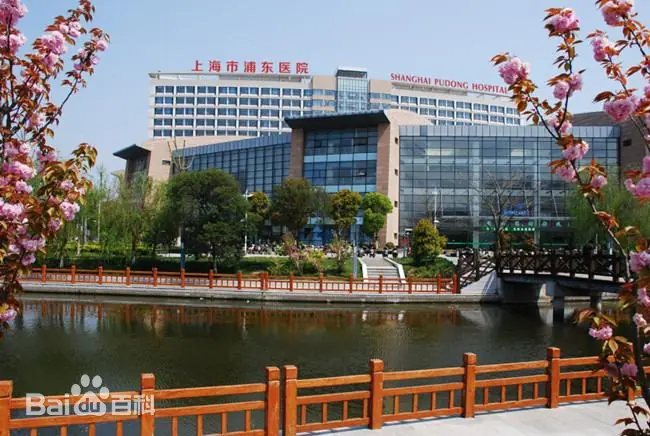
Fudan University Affiliated Pudong Hospital
- Hospital TypePublic
- GradeGrade A Tertiary
- CityShanghai
- Founded1932 Est.
Introduction
Shanghai Pudong Hospital (also known as Fudan University Affiliated Pudong Hospital) was founded in 1932. As the first public hospital in the region, it has evolved through nearly a century of innovation into a large modern hospital integrating medical services, education, research, prevention, and rehabilitation. It became a Fudan University-affiliated hospital in 2015 and was upgraded to a tertiary general hospital in 2019. It is one of Shanghai's first regional medical centers, a pilot unit for modern hospital management systems, and a pilot unit for high-quality development of public hospitals in Shanghai. The hospital is located at 2800 Gongwei Road, Pudong New Area, adjacent to the Eastern Hub, in the core area of Shanghai Pudong's "Two Ports and Four Zones" (Pudong International Airport, Yangshan Deep-Water Port, China (Shanghai) Pilot Free Trade Zone, Lin-gang Special Area, Zhangjiang Hi-Tech Park, and Shanghai International Tourism and Resorts Zone (Disneyland)). It implements a coordinated development strategy of "one hospital, two campuses," with the existing Huinan campus and the Lin-gang campus (under construction). The Huinan campus covers an area of 150 mu (approx. 10 hectares), with a building area of 127,200 square meters, 1,020 approved beds, 6,697 medical devices, equipment assets worth 729 million RMB, and 125 devices valued over one million RMB, including 1.5T MRI, 3.0T MRI, PET-CT, dual-source CT, 128-slice CT, DSA, SPECT-CT, hyperbaric oxygen chamber, hybrid operating room, and high-frequency thermotherapy. It has 42 clinical and medical technology departments. In 2025, the outpatient and emergency visits reached 2.01 million, inpatient admissions 61,000, and inpatient surgeries 37,000. The Lin-gang campus is expected to be completed in 2026, with a planned area of 97.5 mu (approx. 6.5 hectares), a building area of 170,000 square meters, and 700 beds, aiming to become a modern medical center of international standards and further enhance regional medical service capabilities. The hospital has achieved remarkable disciplinary development, hosting national-level platforms such as the National Advanced Stroke Center, China Chest Pain Center, China Atrial Fibrillation Center, and National Health Management Demonstration Base. Cardiovascular surgery and orthopedic surgery are key disciplines of the Shanghai Health System. Vascular surgery, trauma orthopedics, nephrology, and clinical pharmacy are key specialties of Shanghai. Vascular surgery, orthopedics, oncology, and gastroenterology have been selected as Pudong New Area's new quality specialties. Additionally, the hospital has developed a number of advantageous disciplines under Fudan University's "985" project, Pudong New Area's highland disciplines, new quality clinical specialties, and key disciplines/specialties, including hepatobiliary surgery, urology, obstetrics and gynecology, nuclear medicine, neurology and neurosurgery, and respiratory and critical care medicine. The hospital actively engages in international exchange and cooperation. It is a clinical medicine cooperation base for Duke University and has established long-term disciplinary partnerships with renowned institutions such as Stanford University, the University of California, San Francisco, the Cleveland Clinic, and Chang Gung Memorial Hospital in Chiayi, Taiwan, fostering an open and inclusive international development pattern. In 2025, it became one of the first contracted units for cross-border medical service cooperation, cross-border medical education, and cross-border medical insurance and settlement cooperation in the Lin-gang Special Area, forming an important part of the three resource clusters of cutting-edge medicine, serious medicine, and consumer medicine in the area. The hospital currently has 1,902 employees, including 528 with master's or doctoral degrees and nearly 60 graduate supervisors from Fudan University and other institutions, gathering high-level talents at the national and provincial/ministerial levels, such as dual-appointment academicians, National Outstanding Youth Science Fund recipients, and Shanghai Leading Talents. It has established a high-level talent training system with 5 first-level discipline doctoral programs, 16 second-level discipline doctoral programs, 6 first-level discipline master's programs, and 31 second-level discipline master's programs, providing strong talent support for the hospital's sustainable development. As a Fudan University-affiliated hospital, it undertakes teaching tasks for undergraduate, graduate, and post-graduation medical education. It cooperates with the clinical medical schools of Hebei Medical University and Wenzhou Medical University, serves as a strategic partner hospital of Zunyi Medical University, and is a teaching hospital for Nanjing Medical University, Jishou University, and Shanghai University of Medicine & Health Sciences, as well as a clinical practice teaching base for Shanghai University of Traditional Chinese Medicine, Nanjing University of Chinese Medicine, and Harbin Medical University. It has 8 national and Shanghai-level standardized residency training bases, a standardized training base for assistant general practitioners, a general practice job-transfer training base, a Shanghai community clinical pharmacist standardized training base, an AHA training center, and an artificial intelligence surgical education and training base. It is also a national examination site for the Clinical Medicine Professional (Undergraduate) Level Test and a Shanghai clinical practice ability assessment site for the completion of national standardized residency training. In addition, the hospital has built a 3,040-square-meter modern teaching base equipped with an advanced clinical skills training and assessment center. In 2012, the hospital proposed the concept of a "Medical Research and Innovation Center." In 2019, the 34,000-square-meter Fudan University Shanghai Medical College (Pudong) Research and Teaching Building was completed and put into use. It has been approved to establish high-level research platforms such as the Shanghai Municipal Science and Technology Commission Primate Model Animal Professional Technical Service Platform, Shanghai Key Laboratory of Acupuncture Mechanism and Acupoint Function, Shanghai Key Laboratory of Vascular Lesion Regulation and Remodeling, Fudan University Large Animal Experiment Center, Fudan University Cellular Immunotherapy Clinical Research Center, and Fudan University Shanghai Medical College Drug Clinical Research (Pudong) Center. It also houses 9 specialized laboratories, including the Institute of Digital Orthopedics, Advanced Gene Editing R&D Center, and Zero-Magnetic Interventional Medicine Co-built Laboratory, becoming a hub for Zhangjiang medical translation. The hospital's research competitiveness ranks among the top in its peer group. In 2024, 15 disciplines ranked in the top five among municipal district-level hospitals in Shanghai, with general surgery, gastroenterology, oncology, and nuclear medicine ranking first.